Internal Tools for Large Enterprise Operations (PepsiCo)
Modernising internal applications for complex enterprise workflows
Context:
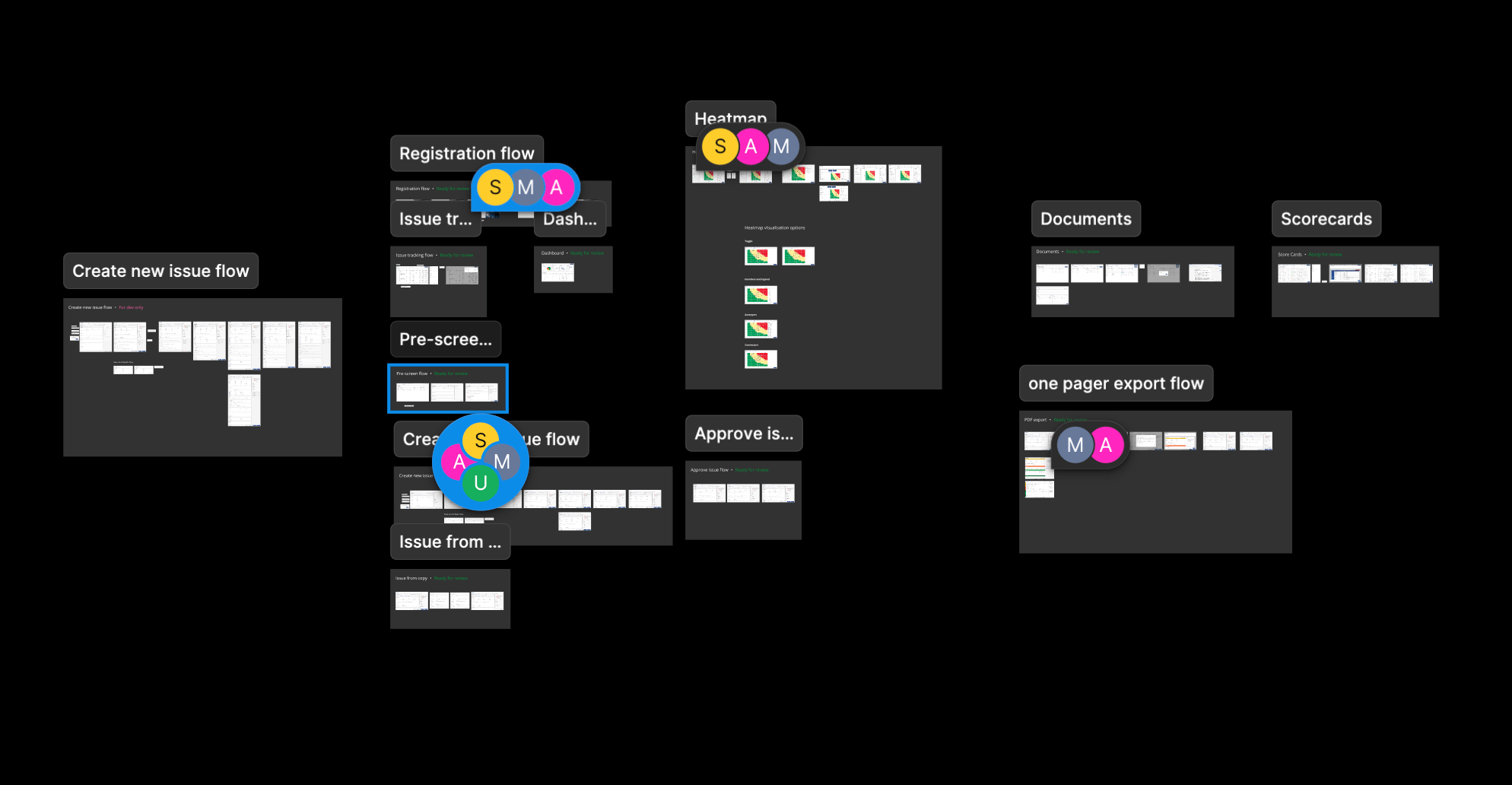
This project focused on modernising a set of internal enterprise applications used across different operational processes within a large global organisation.
Most tools were legacy Canvas Apps with outdated UX, limited functionality, and inconsistent interaction patterns.The goal was to improve usability, extend functionality, and bring coherence across multiple internal systems.
Problem
Existing applications were difficult to use and no longer supported evolving business needs.Users relied on workarounds, manual steps, and parallel tools to complete tasks.
The lack of consistency across applications increased cognitive load and slowed down daily operations.
My role
Senior UX/UI Designer
I was responsible for redesigning and extending multiple internal applications, developing a unified design system, and collaborating closely with business analysts, stakeholders, and developers.
I also facilitated workshops and contributed to internal design education.
Key challenges
- Multiple legacy applications with different purposes and UX maturity
- Complex enterprise workflows and domain-specific processes
- Technical constraints of existing Canvas Apps
- Need for consistency across tools used by different teams
Design approach
- Audited existing applications to identify usability gaps and functional limitations
- Simplified and restructured workflows based on real operational needs
- Prioritised clarity, efficiency, and consistency over visual redesign
- Introduced shared interaction patterns to reduce learning effort
Core applications redesigned:
Issue tracking application
A core operational tool designed to support a wide range of issue-related workflows across the organisation.
The solution covered approximately 12 distinct flows, including issue reporting, triage, investigation, escalation, resolution, and closure, adapted to different operational contexts.
In addition to core workflows, the application included built-in reporting and analytics tools to track issue trends, statuses, and resolution performance, supporting data-informed decision-making.
1
Complex issue tracking system supporting multiple workflows, reporting, and operational analytics.
Facility data update requests
Application for requesting and approving updates to facility-related data.
2
Structured request and approval flow replacing ad-hoc updates.
Regulatory inspection app
A highly complex operational tool designed to support end-to-end regulatory inspection processes.The workflow included multiple sequential and branching steps, from preparation and on-site inspection to documenting findings, follow-ups, and closure.
The application was designed for both desktop and mobile use, enabling inspections to be performed in the field and reviewed later in a desktop environment.
Built-in reporting and analytics functionality provided visibility into inspection results, trends, and compliance status across facilities.
3
End-to-end regulatory inspection system with multi-step workflows, mobile support, and reporting.
Gaps observation & action plans
A complex, multi-step operational workflow designed to identify gaps, assess their impact, and manage corrective action plans.The process covered gap detection, prioritisation, assignment of responsibilities, tracking progress, and validation of outcomes.
The application was designed for both desktop and mobile use, enabling gaps to be recorded on-site and reviewed, analysed, and managed later in a desktop environment.
Clear status tracking and structured action plans helped ensure accountability and continuous improvement across teams.
4
Multi-step gap management system supporting both field observation and structured action planning.
Claims management app
An operational system designed to manage both single and multiple claims across different business scenarios.The workflows supported end-to-end claim processing, including submission, review, assessment, resolution, and closure.
A dedicated Feasibility Assessment flow was designed as a separate, structured process to evaluate claims before further actions.
Dashboards provided visibility into claim statuses, volumes, and processing progress to support operational oversight.
5
Claims management system supporting complex workflows, assessments, and operational dashboards.
Additional Internal Applications & Collaborative Delivery
System expansion
Beyond these core applications, multiple other internal tools were redesigned using the same principles and patterns.
Collaborative workshops & knowledge sharing
I facilitated multiple three-day workshops with stakeholders and domain experts.
During these sessions, requirements were gathered, workflows were validated, and MVP solutions were iterated live.
In addition to product work, I conducted masterclasses and internal training sessions for other designers.This helped align design quality and practices across teams.
Scalable design system foundation
To support consistency across numerous applications, a unified design system was developed.
It defined reusable components, layouts, and interaction patterns tailored to enterprise Canvas Apps.
Outcome
The redesigned tools significantly improved usability and task efficiency.
Users could complete workflows faster with fewer errors, while teams benefited from a consistent experience across applications.
* Client-specific data shown in the designs is anonymised or illustrative.The case focuses on system modernisation and UX improvement within enterprise constraints.


Internal Tools for Large Enterprise Operations (PepsiCo)
Modernising internal applications for complex enterprise workflows
Context:
This project focused on modernising a set of internal enterprise applications used across different operational processes within a large global organisation.
Most tools were legacy Canvas Apps with outdated UX, limited functionality, and inconsistent interaction patterns.The goal was to improve usability, extend functionality, and bring coherence across multiple internal systems.
Problem
Existing applications were difficult to use and no longer supported evolving business needs.Users relied on workarounds, manual steps, and parallel tools to complete tasks.
The lack of consistency across applications increased cognitive load and slowed down daily operations.
My role
Senior UX/UI Designer
I was responsible for redesigning and extending multiple internal applications, developing a unified design system, and collaborating closely with business analysts, stakeholders, and developers.
I also facilitated workshops and contributed to internal design education.
Key challenges
- Multiple legacy applications with different purposes and UX maturity
- Complex enterprise workflows and domain-specific processes
- Technical constraints of existing Canvas Apps
- Need for consistency across tools used by different teams
Design approach
- Audited existing applications to identify usability gaps and functional limitations
- Simplified and restructured workflows based on real operational needs
- Prioritised clarity, efficiency, and consistency over visual redesign
- Introduced shared interaction patterns to reduce learning effort
Core applications redesigned:
Issue tracking application
A core operational tool designed to support a wide range of issue-related workflows across the organisation.
The solution covered approximately 12 distinct flows, including issue reporting, triage, investigation, escalation, resolution, and closure, adapted to different operational contexts.
In addition to core workflows, the application included built-in reporting and analytics tools to track issue trends, statuses, and resolution performance, supporting data-informed decision-making.
1
Complex issue tracking system supporting multiple workflows, reporting, and operational analytics.
Facility data update requests
Application for requesting and approving updates to facility-related data.
2
Structured request and approval flow replacing ad-hoc updates.
Regulatory inspection app
A highly complex operational tool designed to support end-to-end regulatory inspection processes.The workflow included multiple sequential and branching steps, from preparation and on-site inspection to documenting findings, follow-ups, and closure.
The application was designed for both desktop and mobile use, enabling inspections to be performed in the field and reviewed later in a desktop environment.
Built-in reporting and analytics functionality provided visibility into inspection results, trends, and compliance status across facilities.
3
End-to-end regulatory inspection system with multi-step workflows, mobile support, and reporting.
Gaps observation & action plans
A complex, multi-step operational workflow designed to identify gaps, assess their impact, and manage corrective action plans.The process covered gap detection, prioritisation, assignment of responsibilities, tracking progress, and validation of outcomes.
The application was designed for both desktop and mobile use, enabling gaps to be recorded on-site and reviewed, analysed, and managed later in a desktop environment.
Clear status tracking and structured action plans helped ensure accountability and continuous improvement across teams.
4
Multi-step gap management system supporting both field observation and structured action planning.
Claims management app
An operational system designed to manage both single and multiple claims across different business scenarios.The workflows supported end-to-end claim processing, including submission, review, assessment, resolution, and closure.
A dedicated Feasibility Assessment flow was designed as a separate, structured process to evaluate claims before further actions.
Dashboards provided visibility into claim statuses, volumes, and processing progress to support operational oversight.
5
Claims management system supporting complex workflows, assessments, and operational dashboards.
Additional Internal Applications & Collaborative Delivery
System expansion
Beyond these core applications, multiple other internal tools were redesigned using the same principles and patterns.
Collaborative workshops & knowledge sharing
I facilitated multiple three-day workshops with stakeholders and domain experts.
During these sessions, requirements were gathered, workflows were validated, and MVP solutions were iterated live.
In addition to product work, I conducted masterclasses and internal training sessions for other designers.This helped align design quality and practices across teams.
Scalable design system foundation
To support consistency across numerous applications, a unified design system was developed.
It defined reusable components, layouts, and interaction patterns tailored to enterprise Canvas Apps.
Outcome
The redesigned tools significantly improved usability and task efficiency.
Users could complete workflows faster with fewer errors, while teams benefited from a consistent experience across applications.
* Client-specific data shown in the designs is anonymised or illustrative.The case focuses on system modernisation and UX improvement within enterprise constraints.