AI Copilot Platforms for Complex Business Workflows
Designing AI-driven assistants for enterprise and regulated environments
Overview
A family of AI-powered copilots designed to support complex business workflows within a single enterprise environment.
The copilots were built to assist users in daily operational tasks through structured, dialogue-driven interactions rather than traditional UI-heavy applications.
While each copilot addressed a specific domain, they shared a unified interaction model and visual system, ensuring consistency and ease of adoption.
Platform approach: conversational UX at scale
All copilots were designed around a dialogue-first interaction model, where users interact with the system through guided conversations.
The primary design challenge was shaping these conversations to feel predictable, efficient, and trustworthy while handling complex underlying processes.
A unified design framework defined:
- conversational patterns and message structure
- action confirmation and feedback logic
- shared visual language (layout, spacing, components)
- differentiation through bot personas, avatars, and accent colours
This allowed multiple copilots to scale across the organisation without increasing cognitive load.
Core copilots designed:
Zappie — Rewards & Team Engagement Copilot
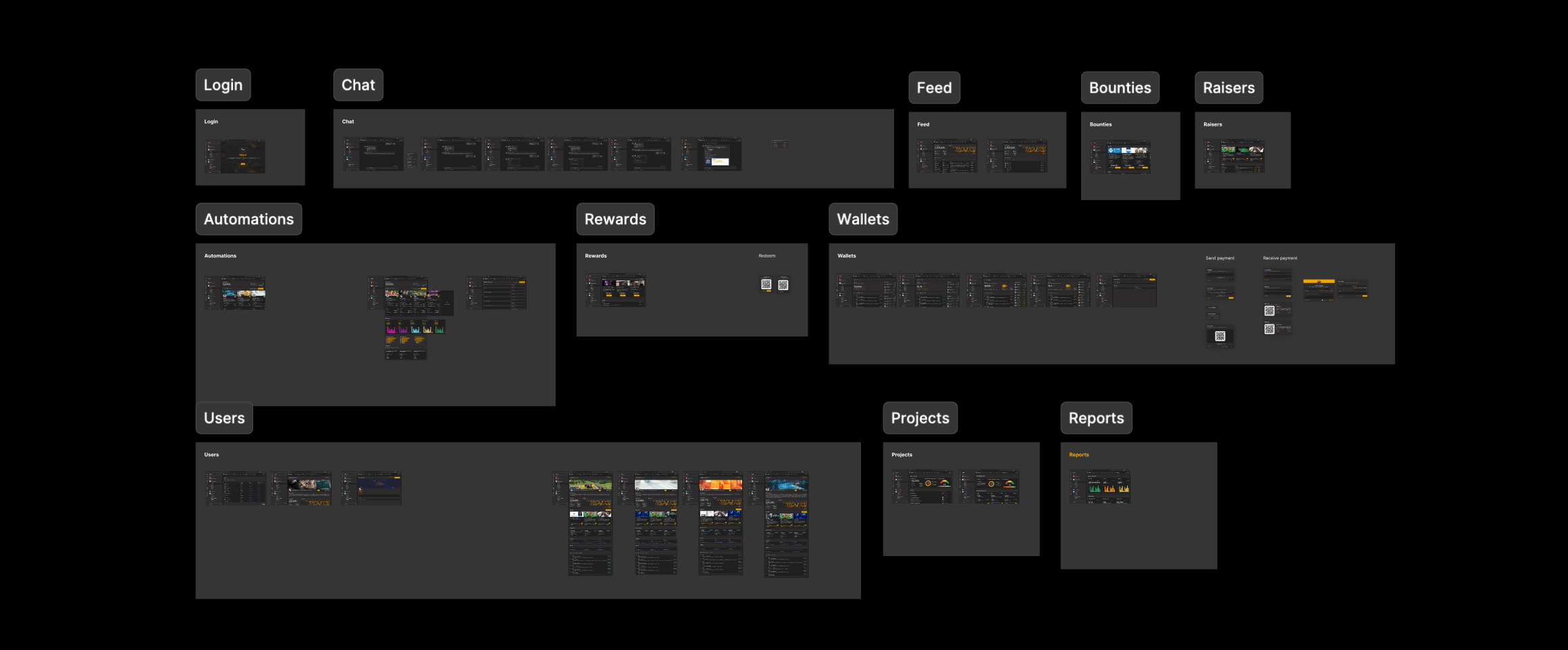
Zappie was the most complex copilot in the ecosystem, designed to support peer recognition, team engagement, and incentive management.Employees could send rewards to colleagues, pool rewards for shared goals (e.g. team events), or exchange earned rewards for tangible benefits such as equipment, gifts, or additional time off.
Beyond conversational interactions, Zappie included a rich set of supporting interfaces:
- a social-style feed showing reward activity
- personal wallets and reward balances
- dashboards for team leads and managers
- analytics tracking engagement and participation
The challenge was to combine emotional, social interactions with structured financial and reporting logic while keeping the experience lightweight and intuitive.
1
Alice for Accounts — Invoice Processing Copilot
Alice supported finance teams by assisting with invoice tracking and processing.The copilot guided users through reviewing, validating, and processing invoices, reducing manual effort in repetitive administrative tasks.
Design decisions focused on accuracy, clarity, and confirmation, ensuring users always understood what actions the system was taking and why.AI assistance was intentionally constrained and transparent to maintain trust in financial workflows.
2
Health Hub — Clinical Documentation Copilot
Health Hub was designed for healthcare professionals and supported documentation during medical consultations.
Unlike other copilots, this product required a more specialised UI layer to handle structured medical data alongside conversational interaction.
The copilot assisted clinicians in capturing information, navigating documentation requirements, and managing patient-related data during consultations.Trust, auditability, and clarity were central design principles due to the regulated nature of the domain.
3
Additional copilots & platform scale
In addition to Zappie, Alice, and Health Hub, numerous other copilots were created for different business processes, including:
- time tracking and productivity (Tina for Timesheets)
- sales opportunity management (Sallie the Seller)
- internal operations and reporting workflows
These copilots reused the same interaction patterns and visual framework, differing primarily in domain logic and bot personas.
Design challenges
- Designing conversational flows for complex, multi-step business processes
- Maintaining consistency across many copilots without limiting flexibility
- Creating trust and transparency in AI-assisted decision-making
- Balancing automation with human control in enterprise environments
Outcome
The result was a scalable copilot platform supporting a wide range of enterprise workflows.
Users could move between copilots with minimal learning effort, while the organisation benefited from consistent interaction models and faster adoption of AI-assisted tools.
* The case focuses on conversational UX, platform design, and system scalability.Visuals are illustrative and anonymised where applicable.


AI Copilot Platforms for Complex Business Workflows
Designing AI-driven assistants for enterprise and regulated environments
Overview
A family of AI-powered copilots designed to support complex business workflows within a single enterprise environment.
The copilots were built to assist users in daily operational tasks through structured, dialogue-driven interactions rather than traditional UI-heavy applications.
While each copilot addressed a specific domain, they shared a unified interaction model and visual system, ensuring consistency and ease of adoption.
Platform approach: conversational UX at scale
All copilots were designed around a dialogue-first interaction model, where users interact with the system through guided conversations.
The primary design challenge was shaping these conversations to feel predictable, efficient, and trustworthy while handling complex underlying processes.
A unified design framework defined:
- conversational patterns and message structure
- action confirmation and feedback logic
- shared visual language (layout, spacing, components)
- differentiation through bot personas, avatars, and accent colours
This allowed multiple copilots to scale across the organisation without increasing cognitive load.
Core copilots designed:
Zappie — Rewards & Team Engagement Copilot
Zappie was the most complex copilot in the ecosystem, designed to support peer recognition, team engagement, and incentive management.Employees could send rewards to colleagues, pool rewards for shared goals (e.g. team events), or exchange earned rewards for tangible benefits such as equipment, gifts, or additional time off.
Beyond conversational interactions, Zappie included a rich set of supporting interfaces:
- a social-style feed showing reward activity
- personal wallets and reward balances
- dashboards for team leads and managers
- analytics tracking engagement and participation
The challenge was to combine emotional, social interactions with structured financial and reporting logic while keeping the experience lightweight and intuitive.
1
Alice for Accounts — Invoice Processing Copilot
Alice supported finance teams by assisting with invoice tracking and processing.The copilot guided users through reviewing, validating, and processing invoices, reducing manual effort in repetitive administrative tasks.
Design decisions focused on accuracy, clarity, and confirmation, ensuring users always understood what actions the system was taking and why.AI assistance was intentionally constrained and transparent to maintain trust in financial workflows.
2
Health Hub — Clinical Documentation Copilot
Health Hub was designed for healthcare professionals and supported documentation during medical consultations.
Unlike other copilots, this product required a more specialised UI layer to handle structured medical data alongside conversational interaction.
The copilot assisted clinicians in capturing information, navigating documentation requirements, and managing patient-related data during consultations.Trust, auditability, and clarity were central design principles due to the regulated nature of the domain.
3
Additional copilots & platform scale
In addition to Zappie, Alice, and Health Hub, numerous other copilots were created for different business processes, including:
- time tracking and productivity (Tina for Timesheets)
- sales opportunity management (Sallie the Seller)
- internal operations and reporting workflows
These copilots reused the same interaction patterns and visual framework, differing primarily in domain logic and bot personas.
Design challenges
- Designing conversational flows for complex, multi-step business processes
- Maintaining consistency across many copilots without limiting flexibility
- Creating trust and transparency in AI-assisted decision-making
- Balancing automation with human control in enterprise environments
Outcome
The result was a scalable copilot platform supporting a wide range of enterprise workflows.
Users could move between copilots with minimal learning effort, while the organisation benefited from consistent interaction models and faster adoption of AI-assisted tools.
* The case focuses on conversational UX, platform design, and system scalability.Visuals are illustrative and anonymised where applicable.