Enterprise Healthcare & Regulated Systems (Belfast Trust)
Enterprise healthcare systems for clinical operations and cross-specialty collaboration.
Before:
Paper-based workflows
Before this project, clinic operations relied on a fragmented mix of paper documents, Excel files, and informal processes.
Each clinic documented information differently, often duplicating data across multiple formats.
There was no shared structure, no consistent data flow, and no reliable way to track patient-related processes across clinics and specialists.
Design goal:
A system of internal applications
The goal was to design a structured system of internal applications that would replace manual workflows and support clinic-specific processes while enabling cross-specialty collaboration.
Rather than building a single monolithic system, the solution was designed as a set of connected applications, each addressing a specific operational need.
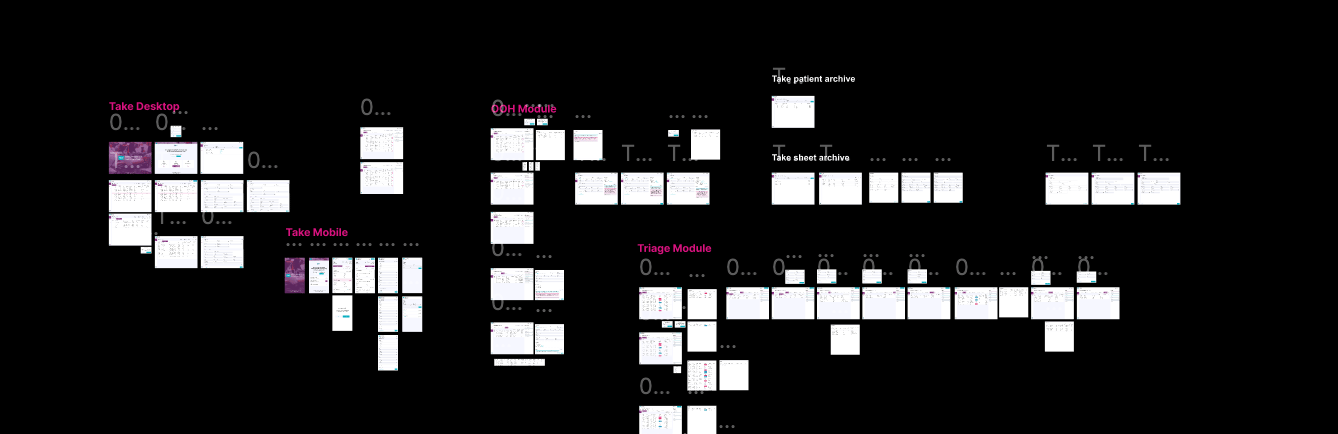
A designed system of interconnected internal applications replacing manual workflows.
Patient Registration System
Patient registration became the foundation of the new digital workflow.The system replaced paper forms and spreadsheets with a structured, consistent approach to capturing and managing patient data.
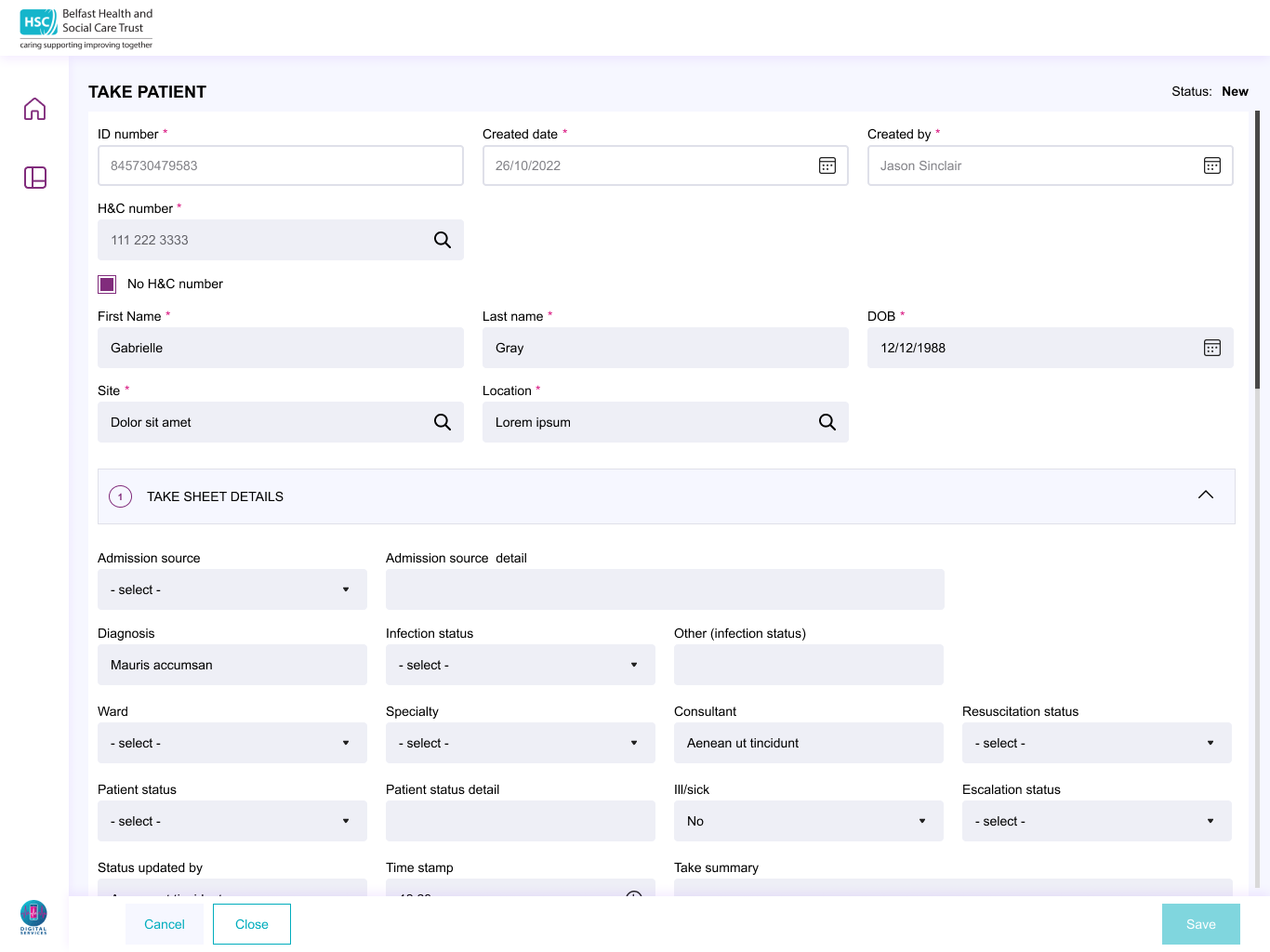
- Structured patient registry replacing manual records
- Digital registration form designed for accuracy and speed
1
Endoscopy Scheduling & Results Management
Endoscopy workflows required precise coordination between scheduling, procedures, and result tracking.The new system provided a clear structure for managing appointments and outcomes across clinics.
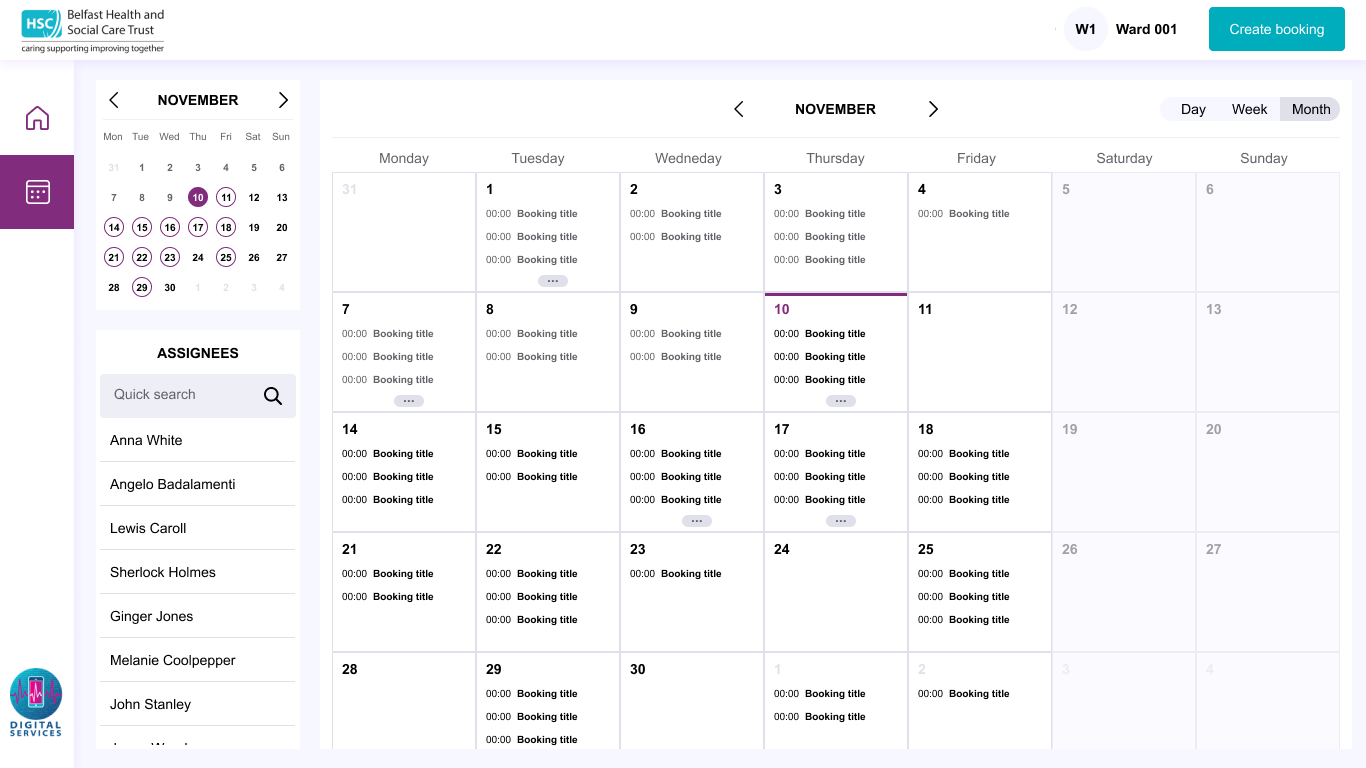
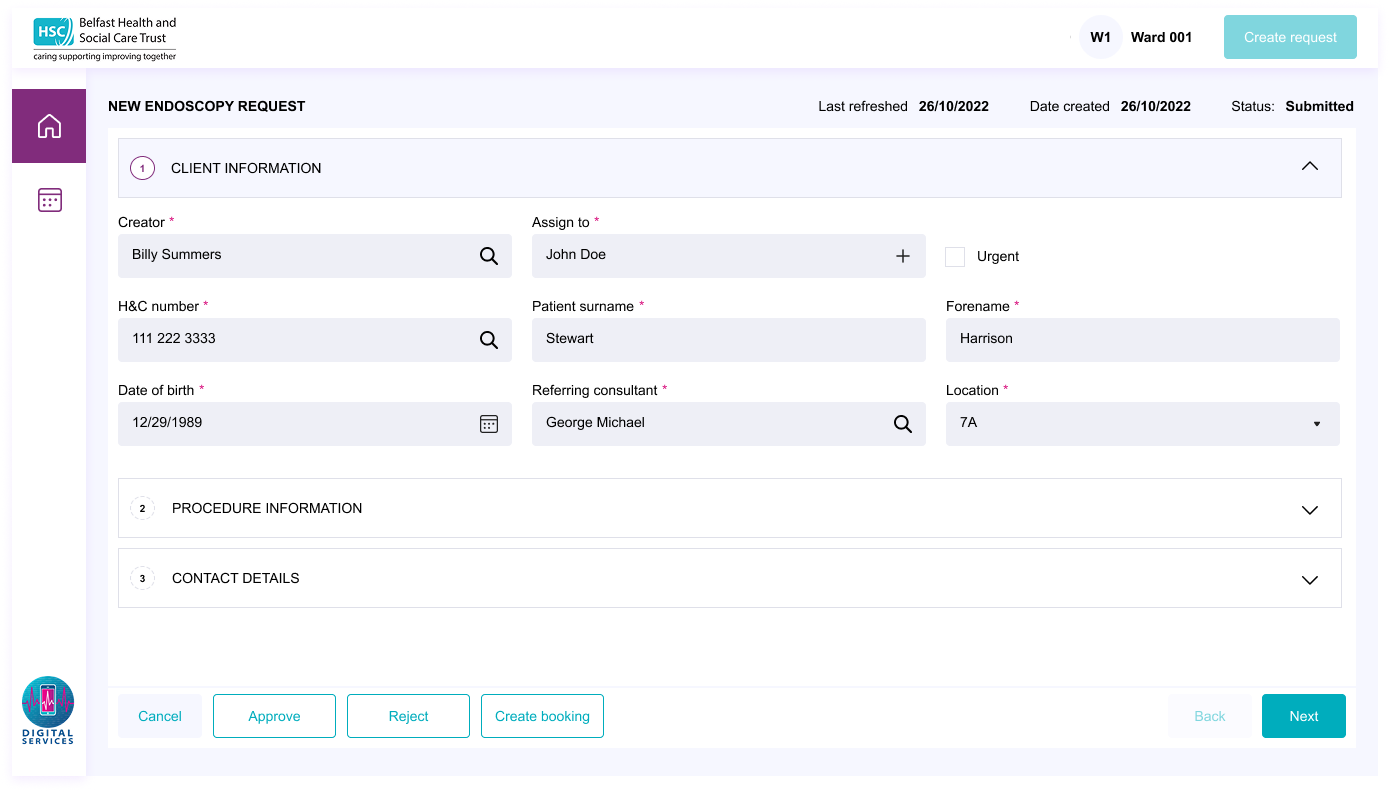
- Endoscopy scheduling interface supporting time-sensitive workflows
- Controlled access to procedure results in a regulated environment
2
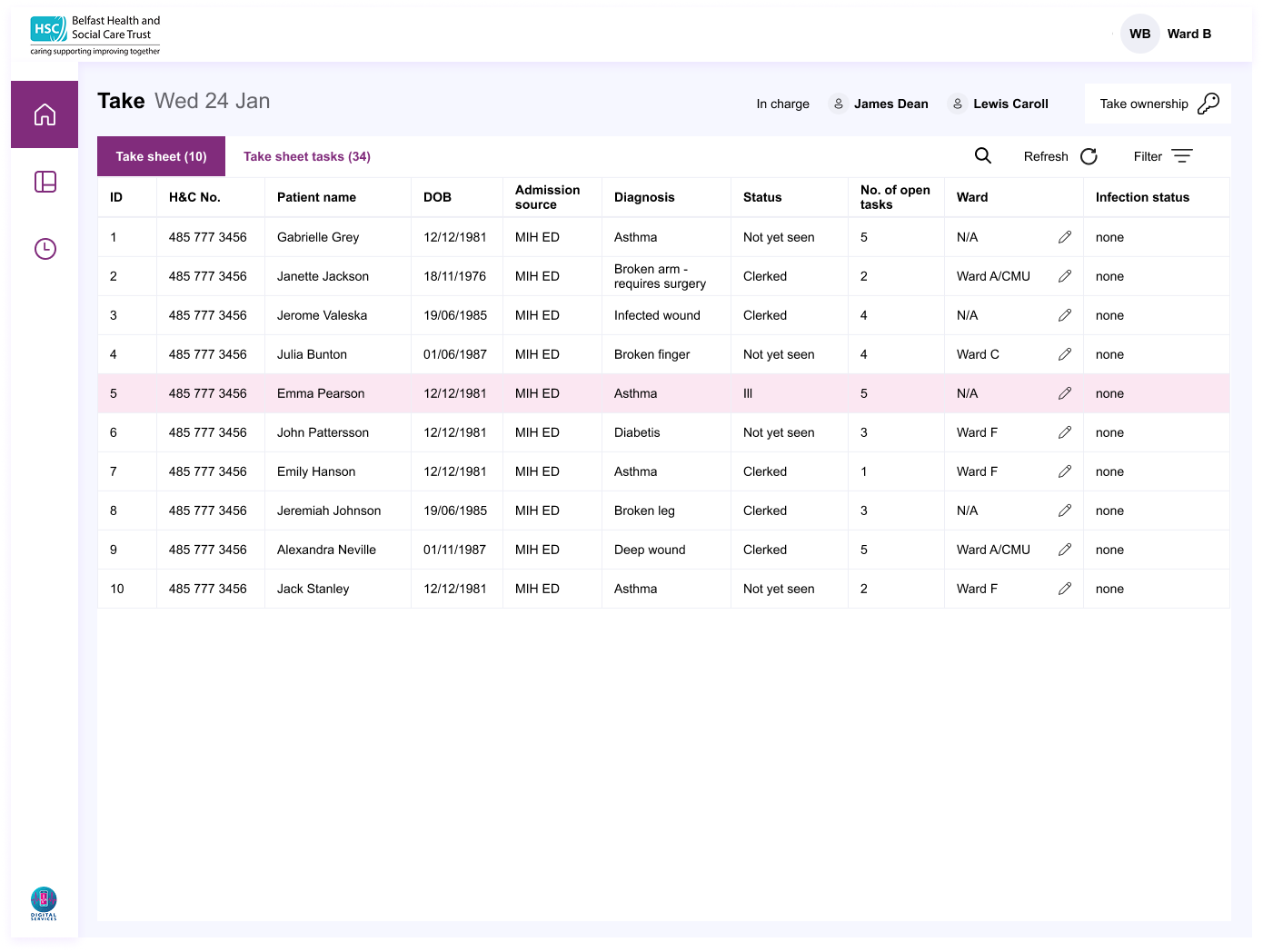
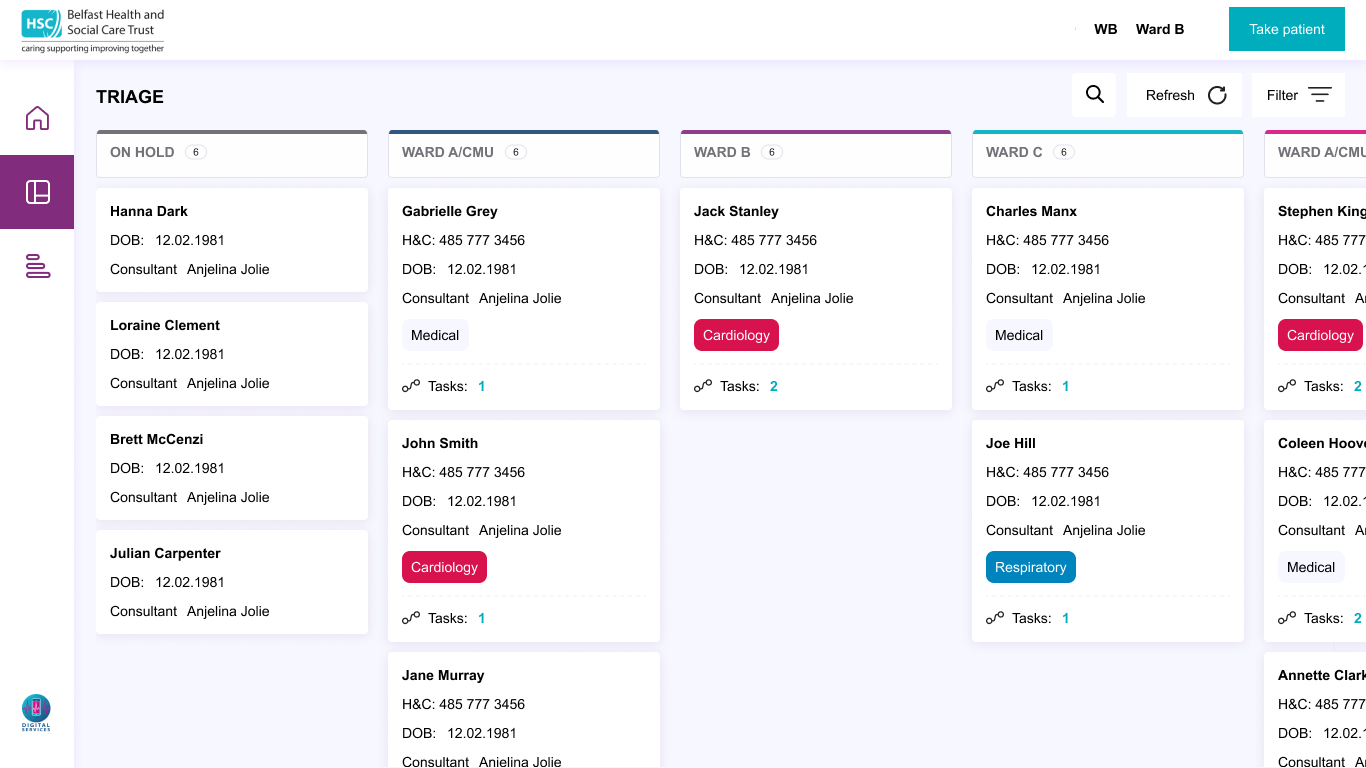
Patient Movement Tracking
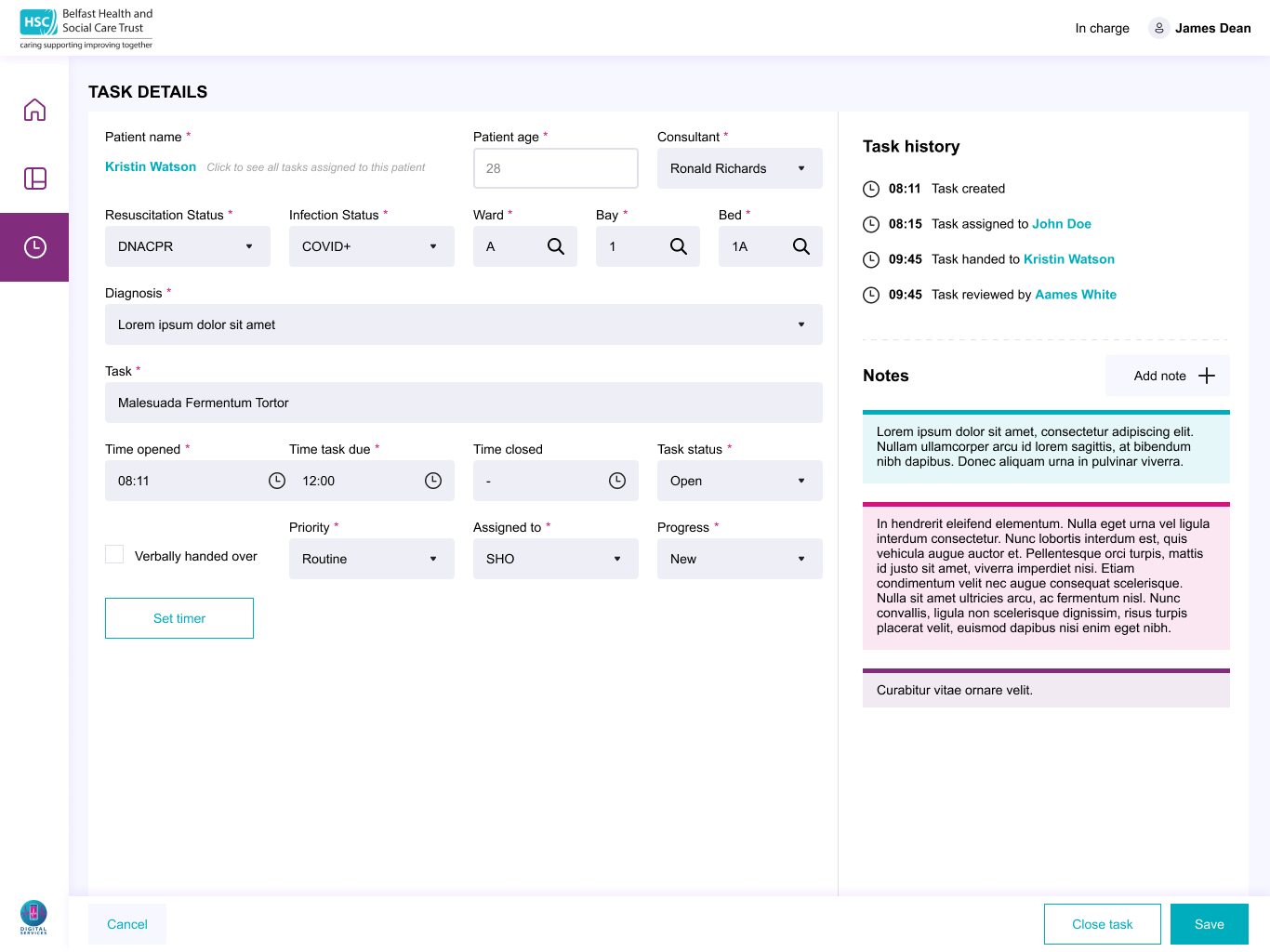
Patient transfers between wards and departments were previously tracked manually, increasing the risk of miscommunication.The application introduced real-time visibility into patient locations and movement statuses.
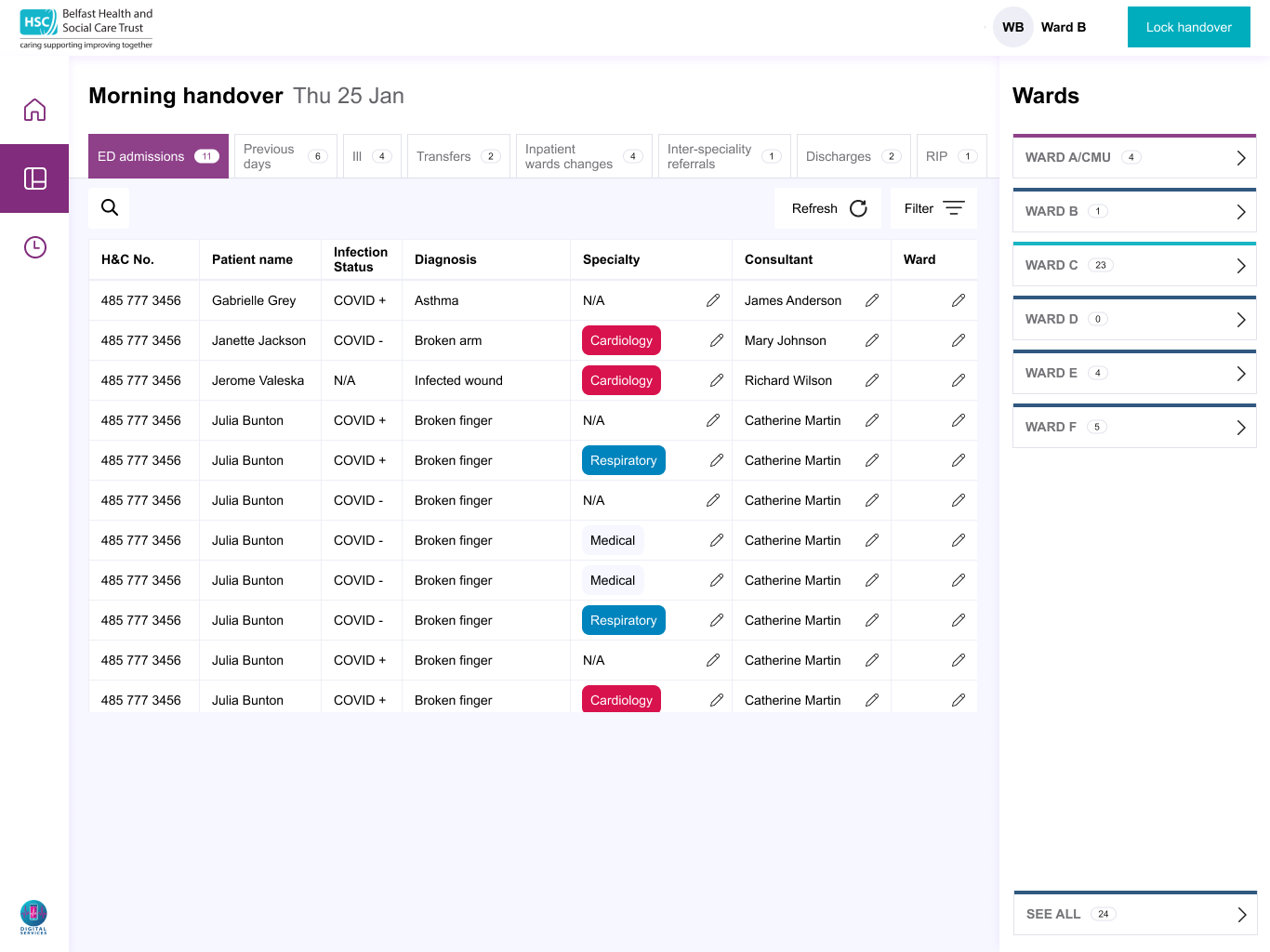
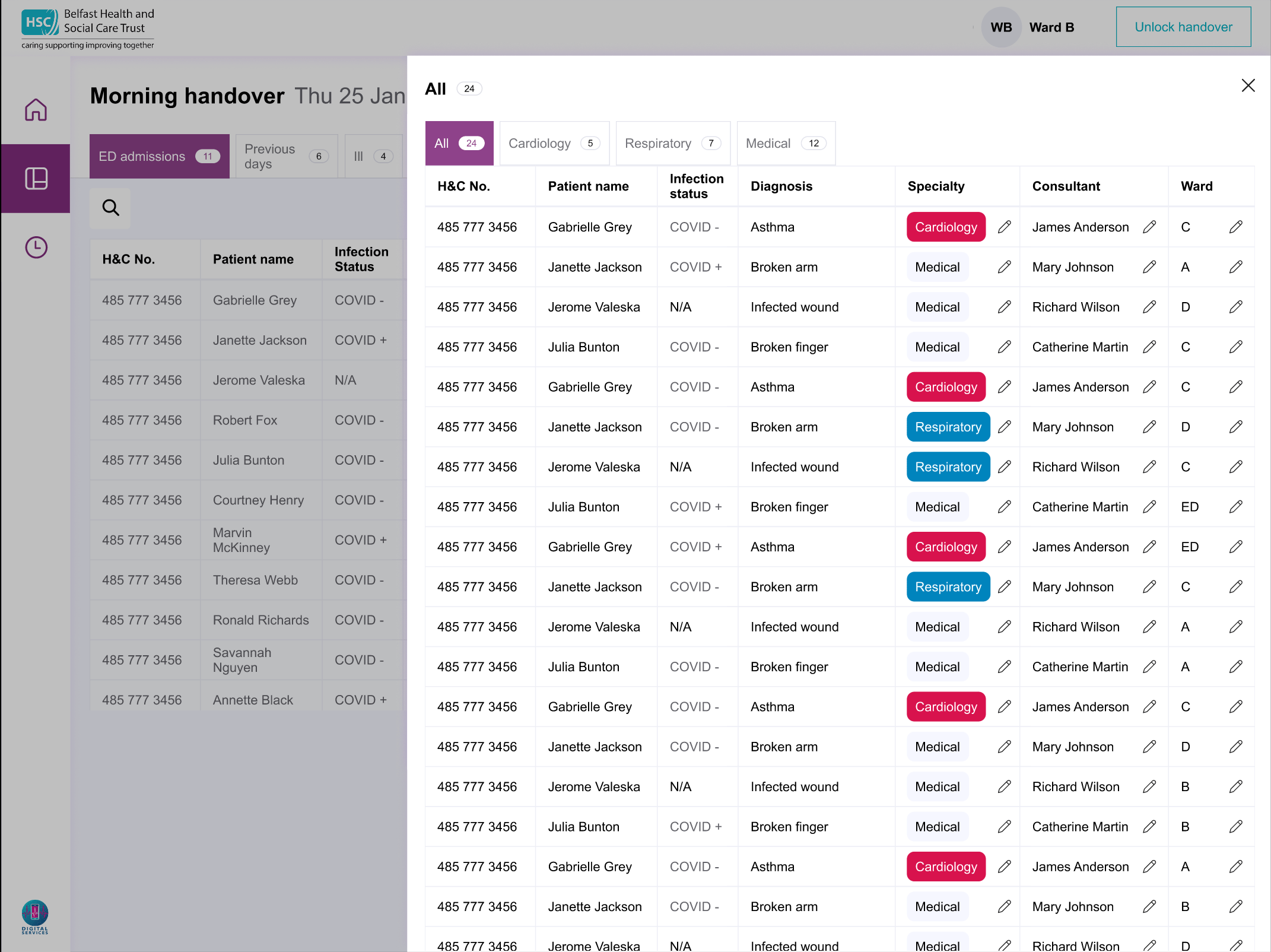
- Patient movement tracking across wards and departments
- Clear status indicators supporting coordination
3
Pharmaceutical System
Pharmaceutical workflows required strict traceability and compliance.The system enabled controlled medication tracking, approvals, and status monitoring.
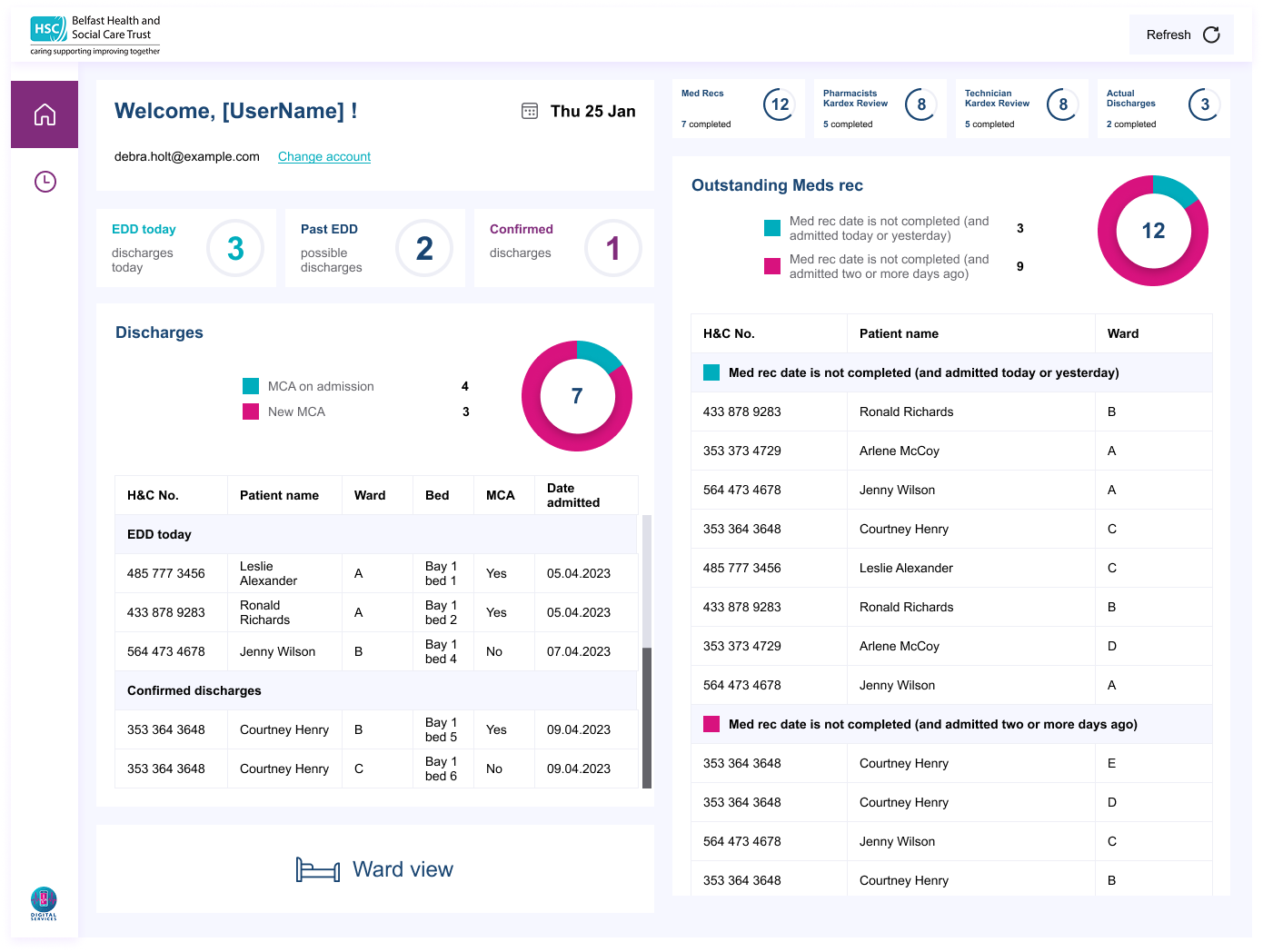
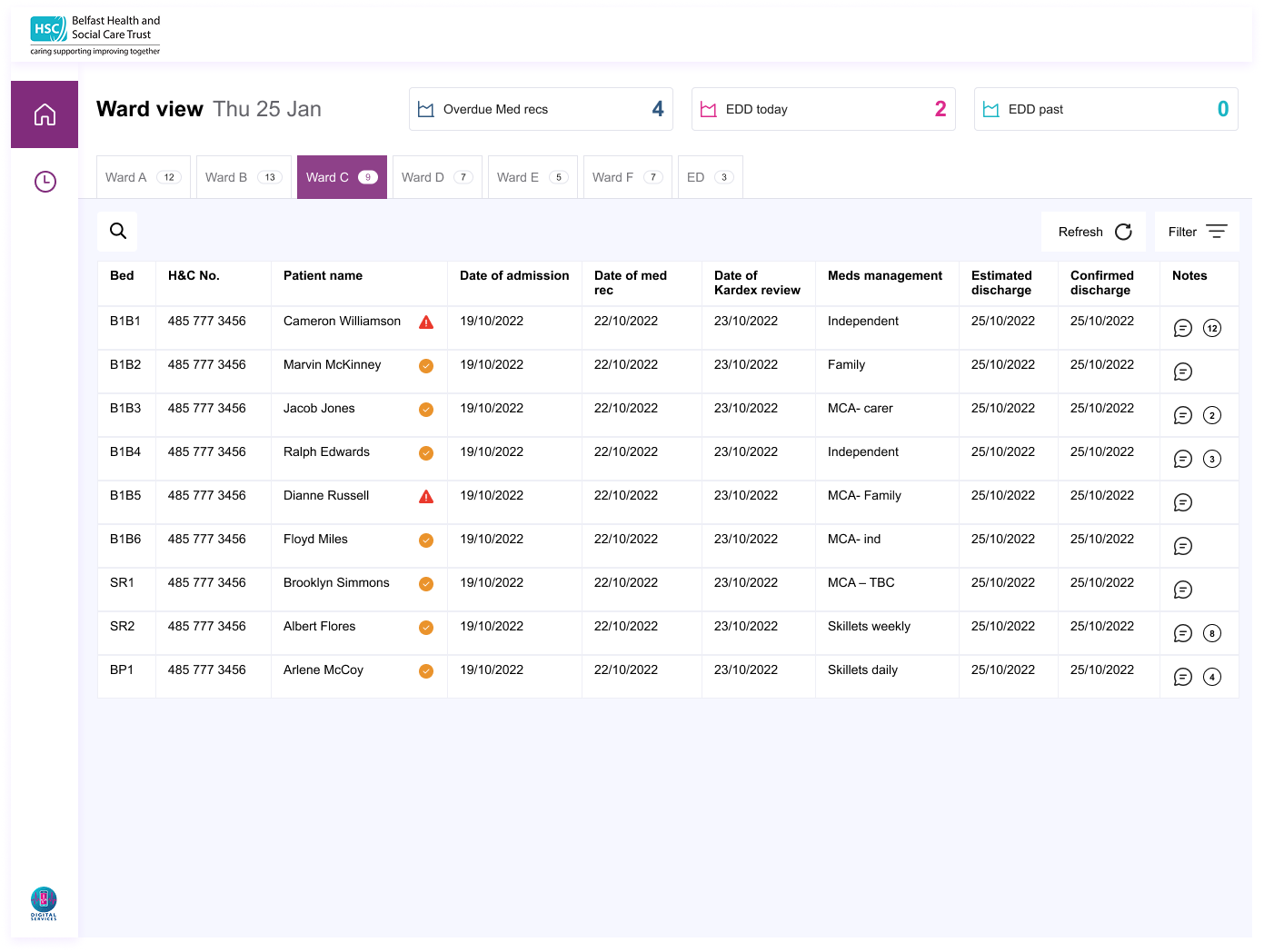
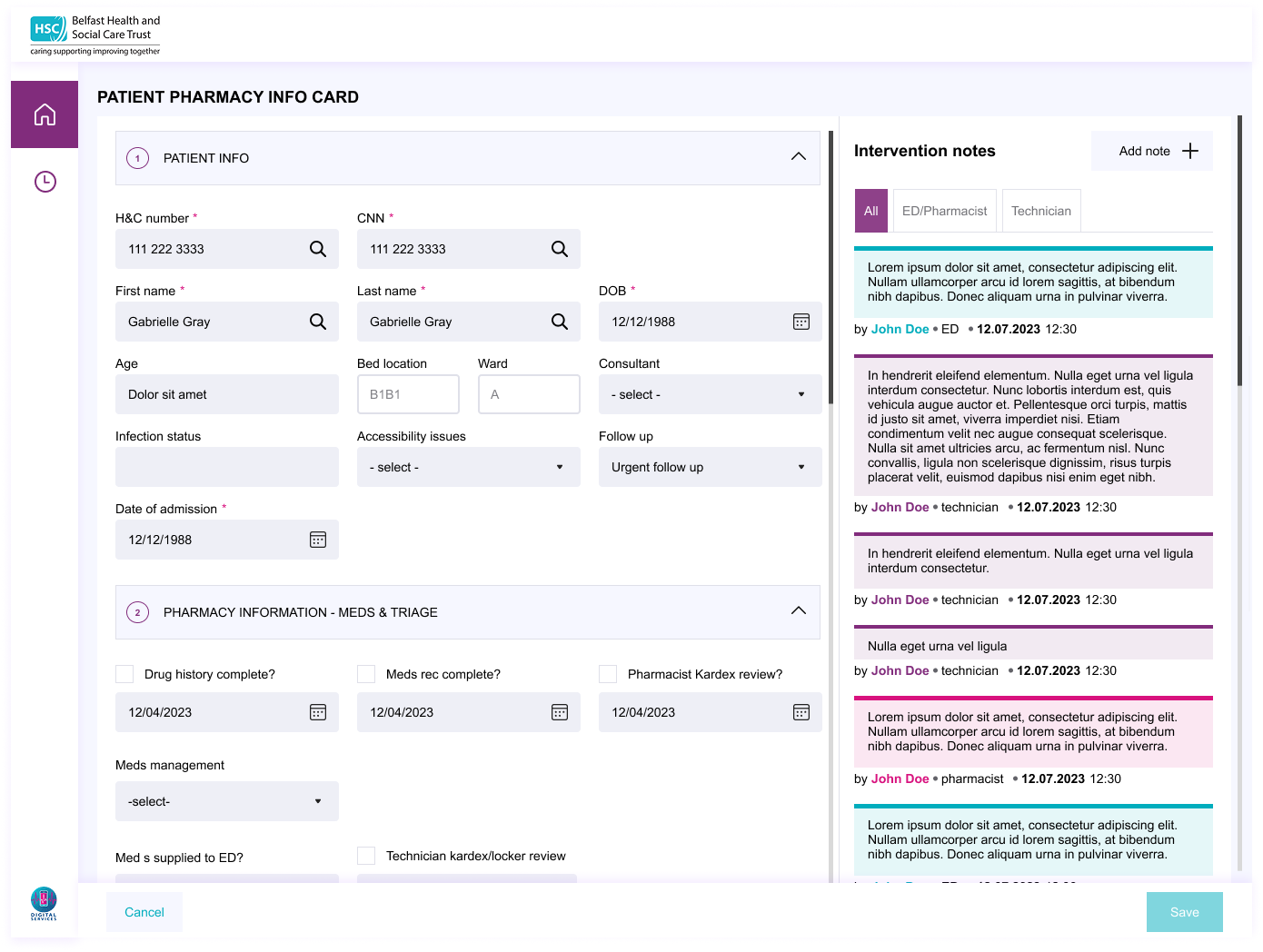
- Compliance-focused pharmaceutical workflows
- Structured data views reducing operational risks
4
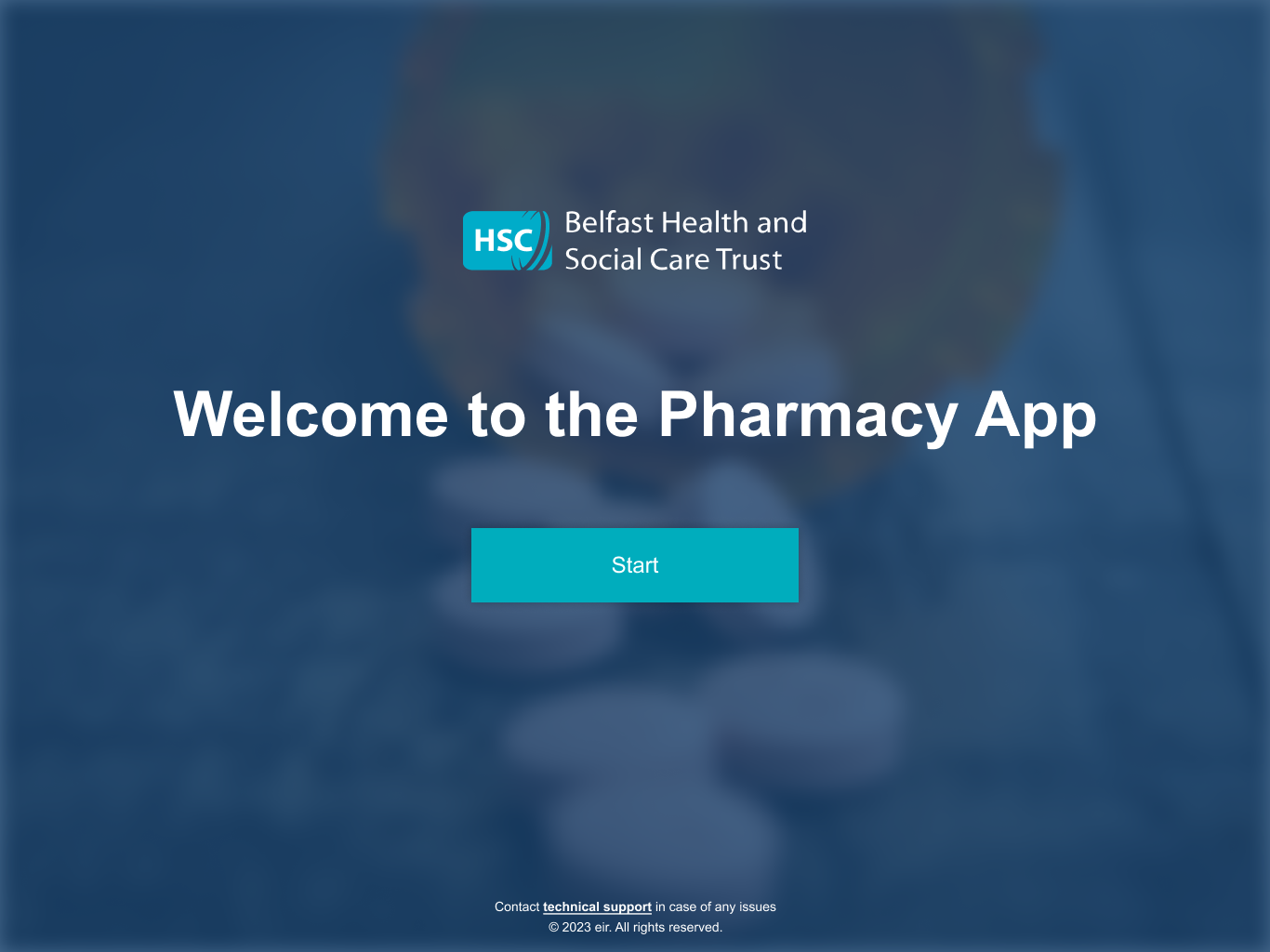
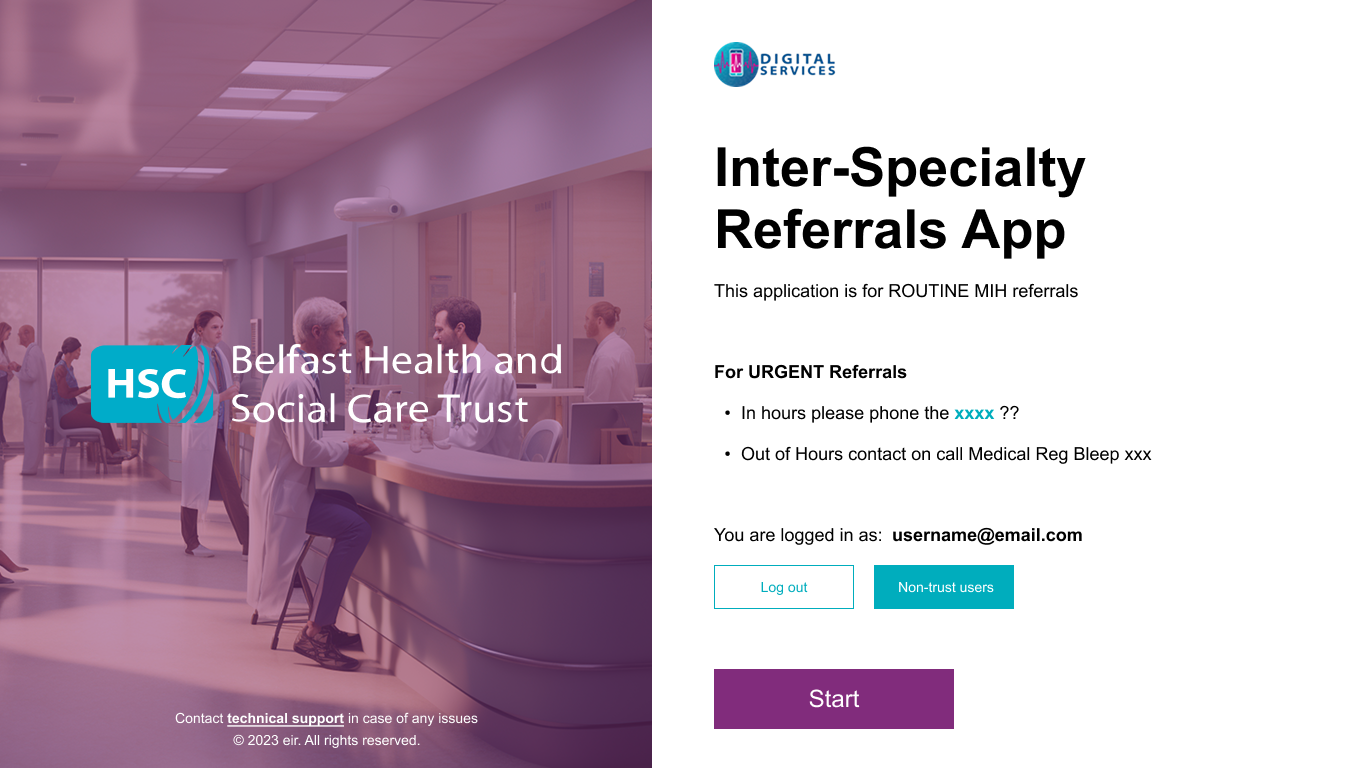
Interspecialty App
Some cases required collaboration between specialists from different departments.The Interspecialty App enabled structured information sharing without relying on informal communication channels.
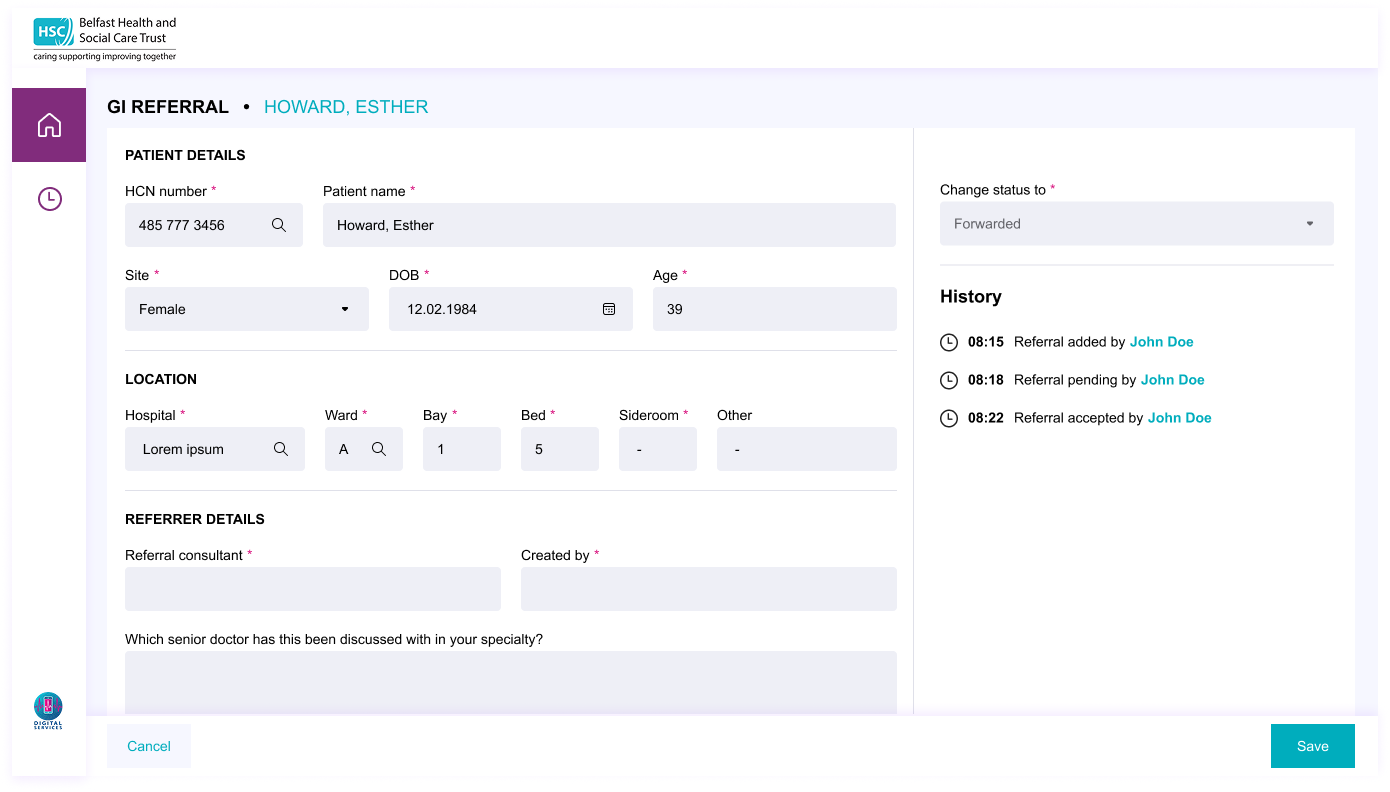
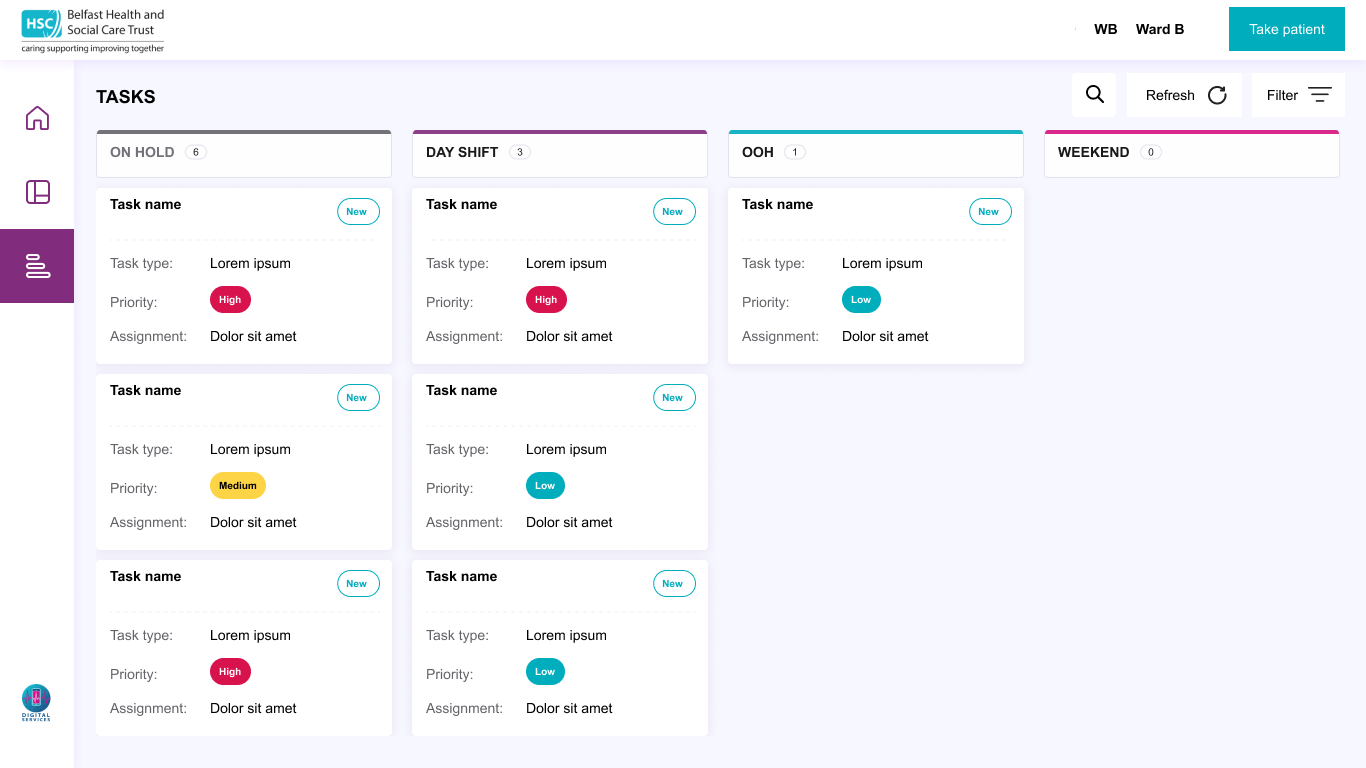
- Compliance-focused pharmaceutical workflows
- Structured data views reducing operational risks
5
Additional Internal Applications & Collaborative Delivery
System expansion
Beyond the core applications, the system expanded to include multiple internal tools supporting operational, administrative, and cross-clinic workflows.
These tools were designed as part of a single structured ecosystem rather than isolated solutions.Shared patterns and logic ensured consistency as the system grew.
Collaborative workshops & rapid MVP validation
I facilitated multiple three-day workshops with client teams to gather requirements and validate workflows.MVP concepts were designed and iterated live during the sessions, allowing immediate feedback and rapid adjustments.
This approach ensured the solutions closely matched real clinic needs from the earliest stages.
Scalable design system foundation
As the number of applications increased, a shared design system became essential.
It defined reusable components, interaction patterns, and layout principles applied across all tools.
This foundation supported consistency, scalability, and long-term maintainability.
Outcome
The new system of internal applications significantly simplified and accelerated clinic operations.
It improved collaboration between specialists, reduced operational errors, and minimised the loss of critical information across workflows.
* Patient data shown in the designs is fictional and anonymised.The case focuses on system design and workflow transformation rather than individual clinical tools.


Enterprise Healthcare & Regulated Systems (Belfast Trust)
Enterprise healthcare systems for clinical operations and cross-specialty collaboration.
Before:
Paper-based workflows
Before this project, clinic operations relied on a fragmented mix of paper documents, Excel files, and informal processes.
Each clinic documented information differently, often duplicating data across multiple formats.
There was no shared structure, no consistent data flow, and no reliable way to track patient-related processes across clinics and specialists.
Design goal:
A system of internal applications
The goal was to design a structured system of internal applications that would replace manual workflows and support clinic-specific processes while enabling cross-specialty collaboration.
Rather than building a single monolithic system, the solution was designed as a set of connected applications, each addressing a specific operational need.
A designed system of interconnected internal applications replacing manual workflows.
Patient Registration System
Patient registration became the foundation of the new digital workflow.The system replaced paper forms and spreadsheets with a structured, consistent approach to capturing and managing patient data.
- Structured patient registry replacing manual records
- Digital registration form designed for accuracy and speed
1
Endoscopy Scheduling & Results Management
Endoscopy workflows required precise coordination between scheduling, procedures, and result tracking.The new system provided a clear structure for managing appointments and outcomes across clinics.
- Endoscopy scheduling interface supporting time-sensitive workflows
- Controlled access to procedure results in a regulated environment
2
Patient Movement Tracking
Patient transfers between wards and departments were previously tracked manually, increasing the risk of miscommunication.The application introduced real-time visibility into patient locations and movement statuses.
- Patient movement tracking across wards and departments
- Clear status indicators supporting coordination
3
Pharmaceutical System
Pharmaceutical workflows required strict traceability and compliance.The system enabled controlled medication tracking, approvals, and status monitoring.
- Compliance-focused pharmaceutical workflows
- Structured data views reducing operational risks
4
Interspecialty App
Some cases required collaboration between specialists from different departments.The Interspecialty App enabled structured information sharing without relying on informal communication channels.
- Compliance-focused pharmaceutical workflows
- Structured data views reducing operational risks
5
Additional Internal Applications & Collaborative Delivery
System expansion
Beyond the core applications, the system expanded to include multiple internal tools supporting operational, administrative, and cross-clinic workflows.
These tools were designed as part of a single structured ecosystem rather than isolated solutions.Shared patterns and logic ensured consistency as the system grew.
Collaborative workshops & rapid MVP validation
I facilitated multiple three-day workshops with client teams to gather requirements and validate workflows.MVP concepts were designed and iterated live during the sessions, allowing immediate feedback and rapid adjustments.
This approach ensured the solutions closely matched real clinic needs from the earliest stages.
Scalable design system foundation
As the number of applications increased, a shared design system became essential.
It defined reusable components, interaction patterns, and layout principles applied across all tools.
This foundation supported consistency, scalability, and long-term maintainability.
Outcome
The new system of internal applications significantly simplified and accelerated clinic operations.
It improved collaboration between specialists, reduced operational errors, and minimised the loss of critical information across workflows.
* Patient data shown in the designs is fictional and anonymised.The case focuses on system design and workflow transformation rather than individual clinical tools.